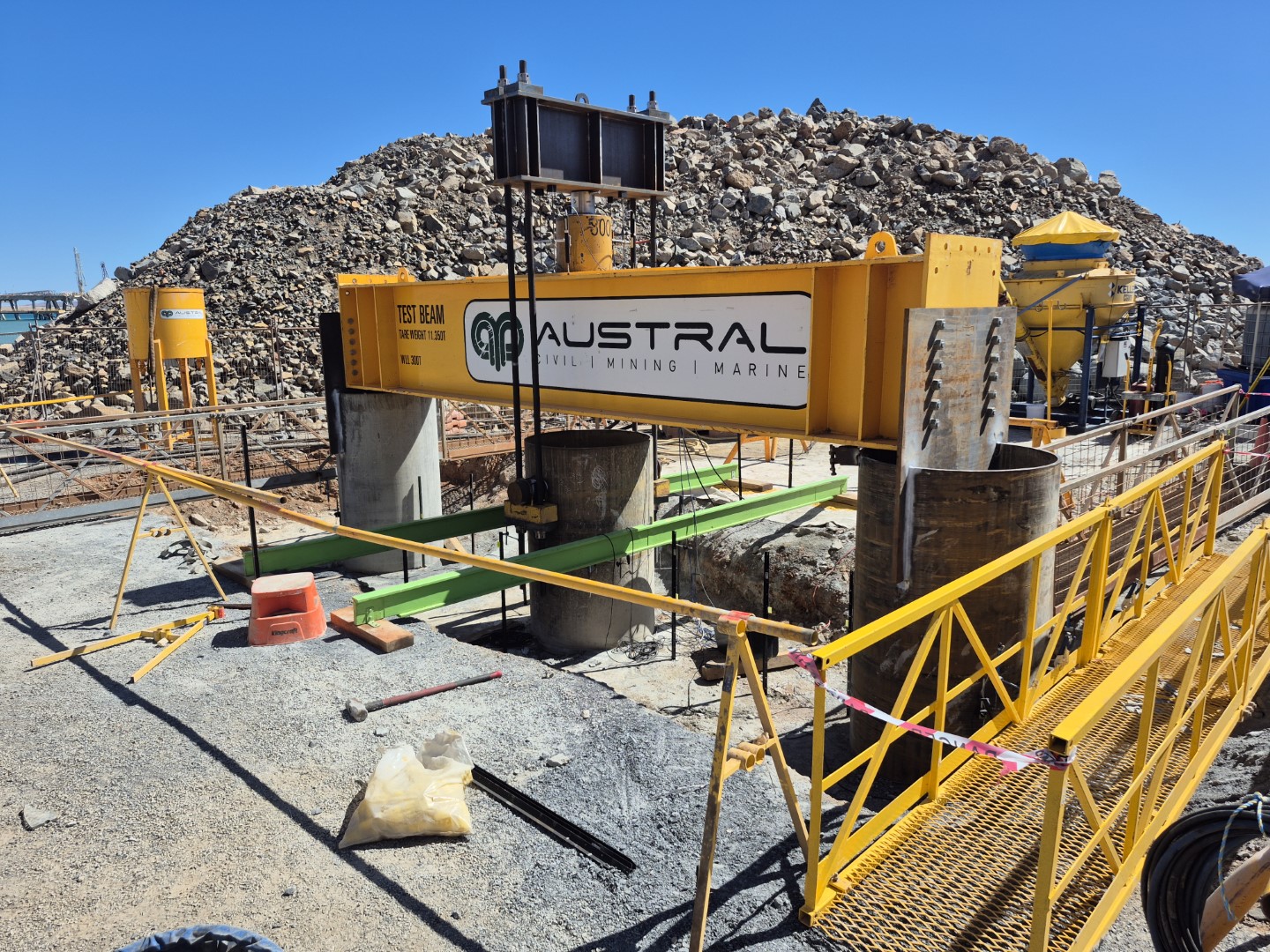
SERVICE: TENSION LOAD TEST
A tension load test evaluates a pile foundation's capacity to resist upward pulling forces — such as those induced by wind uplift, buoyancy, or structural loads. By applying a controlled tensile force to the pile under field conditions and monitoring both load and displacement throughout, the test verifies that the pile's structural integrity and geotechnical performance meet design requirements before construction of the superstructure proceeds.
How It Works
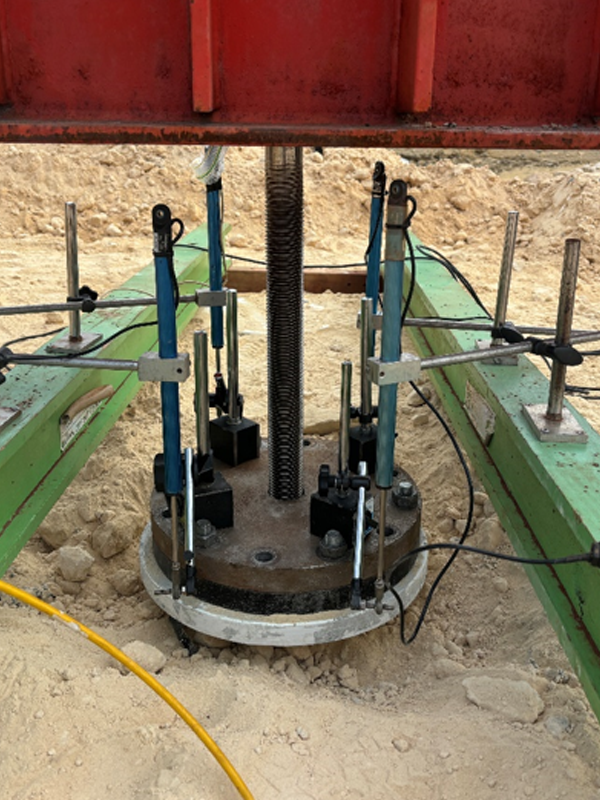
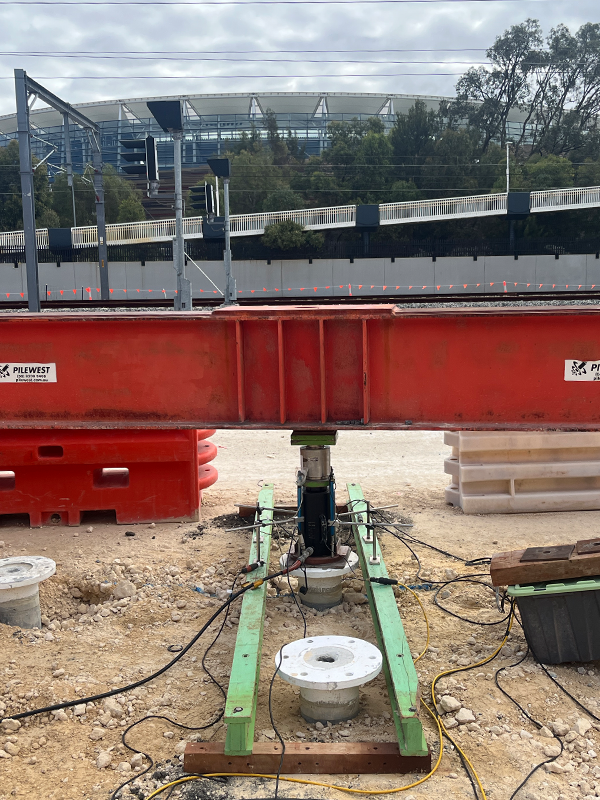
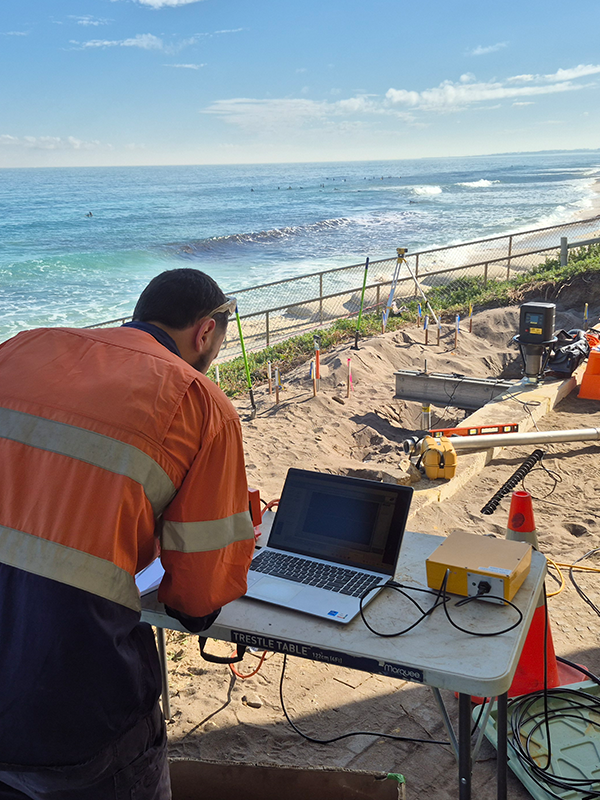
Load is applied to the pile via a hydraulic cylinder seated atop a load beam, with hydraulic pressure recorded by a pressure transducer. A load cell placed in line with the hydraulic cylinder provides precise control of load ramps and holds throughout the test. Pile head displacement is monitored continuously using four displacement sensors attached to the pile head, with all sensor data captured in real time by a computer-based data acquisition system.
All instrumentation and data acquisition exceeds the requirements of AS2159-2009 Sections A3.3 and A3.4.
Load Application
Load is applied incrementally in accordance with AS2159-2009 Appendix A3. The programme progresses through two primary stages: an initial loading to serviceability load (Ps), followed by full unloading, and a subsequent loading sequence to the ultimate geotechnical load (Pg) before a controlled unload back to zero. Each increment is held for a minimum duration to allow stabilisation, with extended holds at Ps and Pg. The loading programme is tailored to each project's specific serviceability and ultimate load requirements.
What It Determines
The test provides direct verification of a pile's ability to transfer tensile loads to the surrounding soil, confirmation of structural integrity under uplift conditions, and documented evidence of compliance with design assumptions and relevant Australian Standards — delivering the confidence needed for safe, code-compliant foundation systems.