SERVICE: PULSE ECHO TESTING
Low Strain Pile Integrity Testing — also referred to as Pile Integrity Testing (PIT) or the Pile Echo Test (PET) — is a rapid, non-destructive method used to assess the structural integrity and length of concrete pile foundations and retaining walls. It provides early identification of major integrity defects that could compromise load-carrying capacity, allowing issues to be addressed before superstructure construction commences.
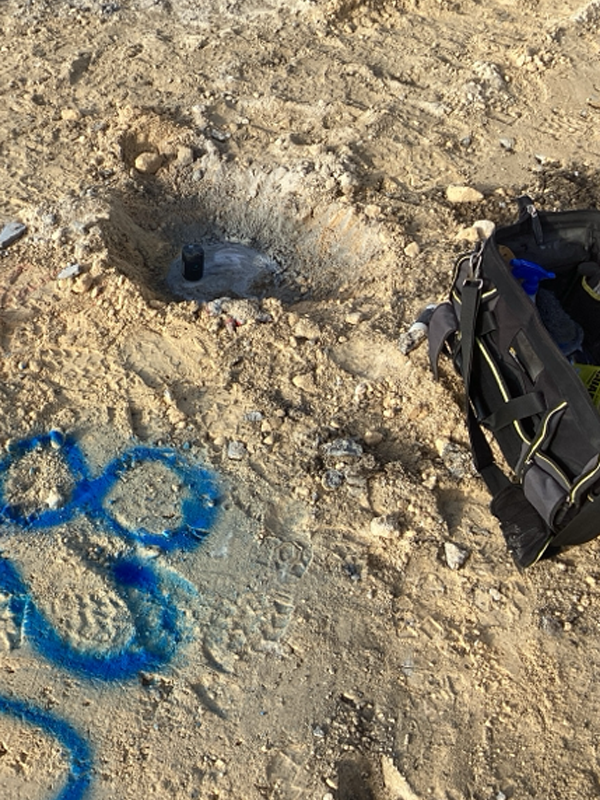
How It Works
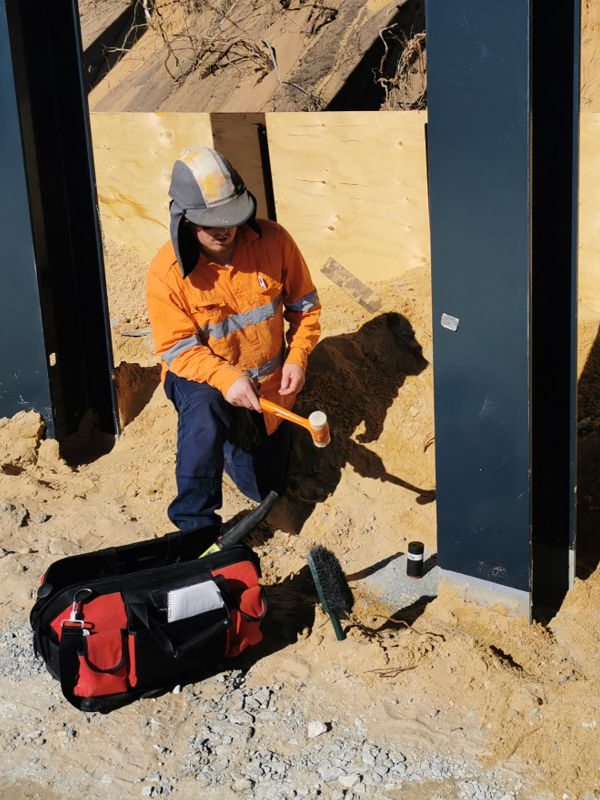
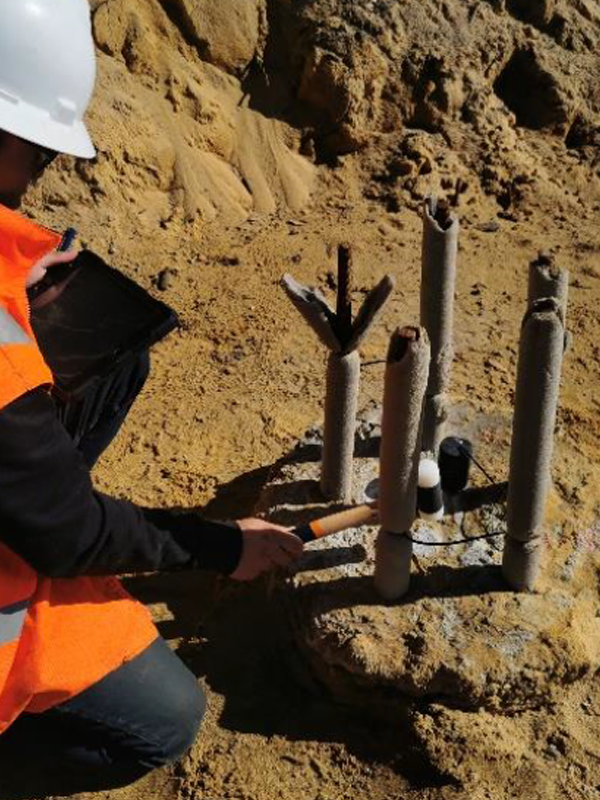
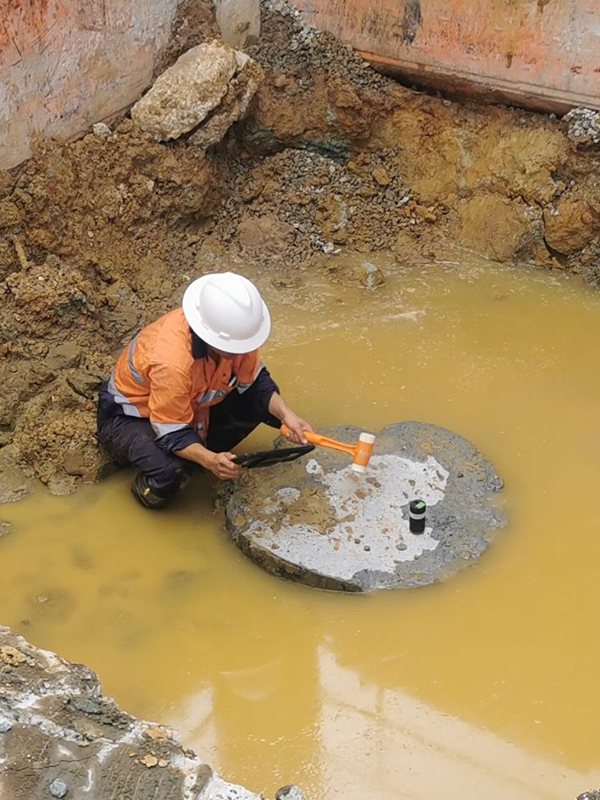
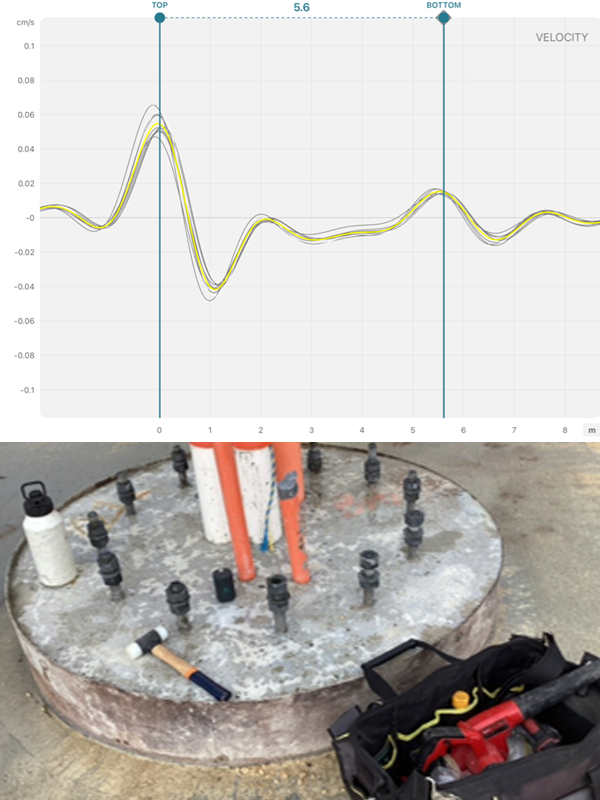
A handheld hammer is used to deliver a low-energy impact to the pile head, generating a stress wave that propagates down the pile shaft. The response is captured by an accelerometer mounted on the pile head and recorded on a site computer. Each pile is tested at multiple points to ensure a consistent, representative signal is obtained.
Initial assessment is performed on site by the attending technician, with post-processing analysis completed off site. A formal report is then issued including processed test signals and all relevant site information. Where anomalies are identified during on-site assessment, remedial action can be undertaken and the pile re-tested before the team leaves site.
Analysis Methods
Two analytical approaches are applied to the recorded data:
The CASE Method provides a rapid, direct field estimation of mobilised resistance for each hammer blow. It is particularly suited to preliminary assessments and driven pile applications where site-specific damping factors have been established.
CAPWAP® Signal Matching provides a more rigorous post-test analysis, extracting static and dynamic soil parameters for both the pile shaft and toe. By iteratively matching calculated and measured pile-top response, CAPWAP® produces detailed output including shaft resistance distribution, end bearing, driving stresses, and a computed load-settlement relationship.
What It Determines
PET analysis uses one-dimensional stress wave theory to assess pile condition along its full length. The method is capable of identifying pile length, significant inclusions, cracking perpendicular to the pile axis, joints and staged concreting boundaries, changes in cross-section, and distinct transitions in surrounding soil layers.
Considerations
PET is best suited to slender pile elements and is designed to detect major structural defects. It will not identify minor cross-sectional variations below ±25%, progressive changes in pile geometry, features located below a significant crack or impedance change, deviations from vertical, or pile load-carrying capacity. As with all integrity testing methods, results should be interpreted in conjunction with available construction records and geotechnical data, and are most reliable when employed alongside appropriate construction quality controls.
Testing is conducted using the Screening Eagle Pundit PI8000, compliant with ASTM C1383, ASTM D5882, DGZfP Merkblatt B11, and RI-ZFP-TU.