SERVICE: DYNAMIC LOAD TESTING
Dynamic Load Testing is a non-destructive method used to determine the load-carrying capacity and structural integrity of piles. By measuring the dynamic response of a pile to the impact of a falling mass, DLT provides reliable data on mobilised resistance under both serviceability and ultimate geotechnical load conditions — delivering critical information at a fraction of the cost and time of traditional static load testing. However, the bearing capacities are simulated based on force and acceleration calculations, whereas a static load test is an applied test.
How It Works
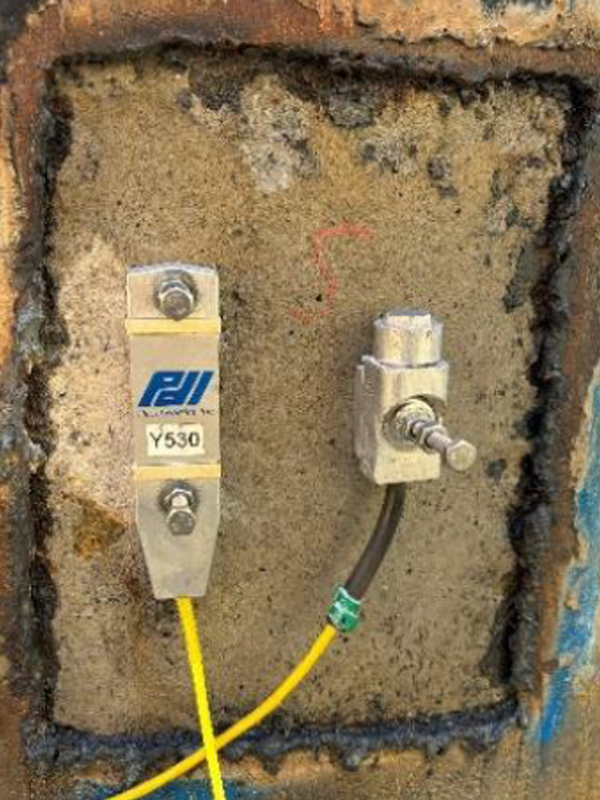
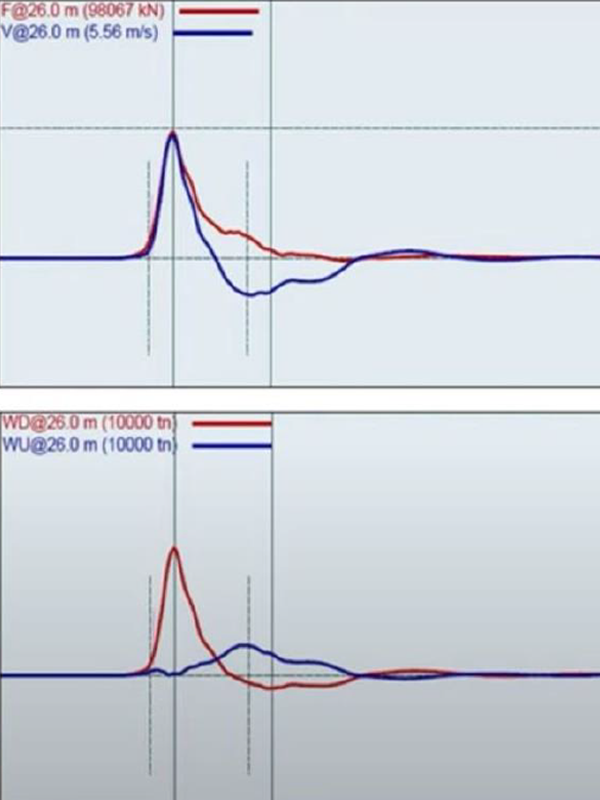
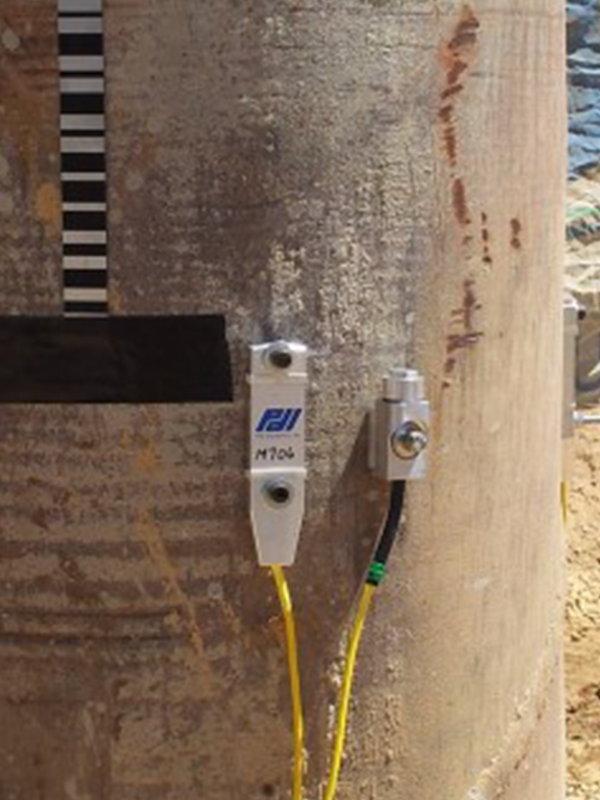
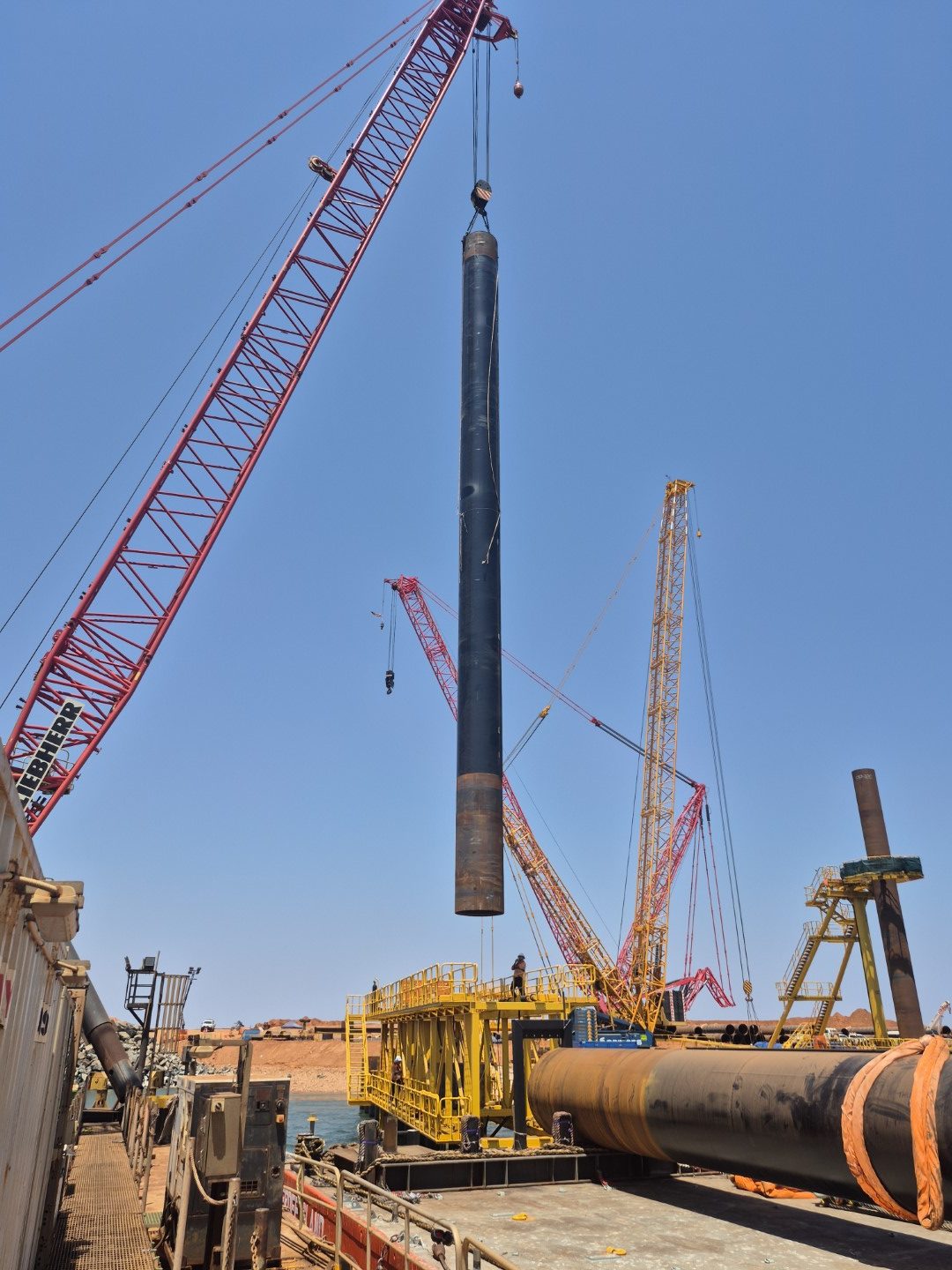
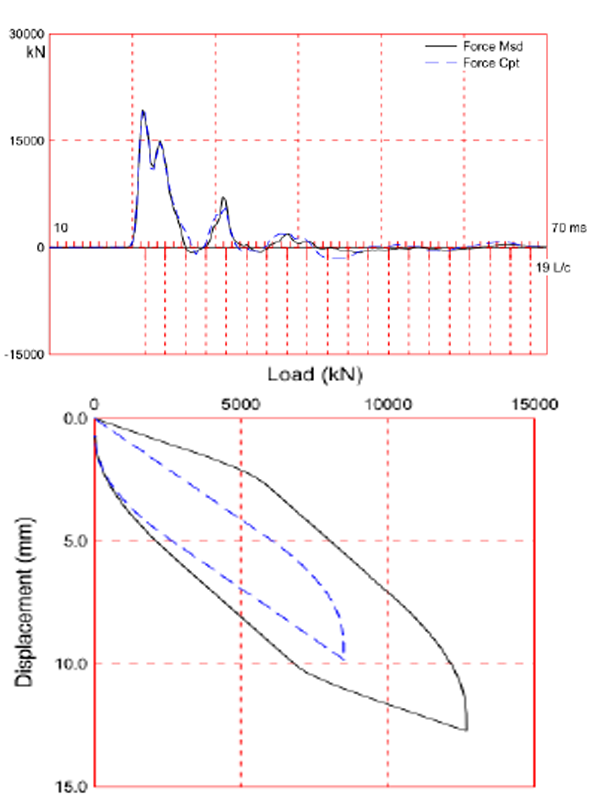
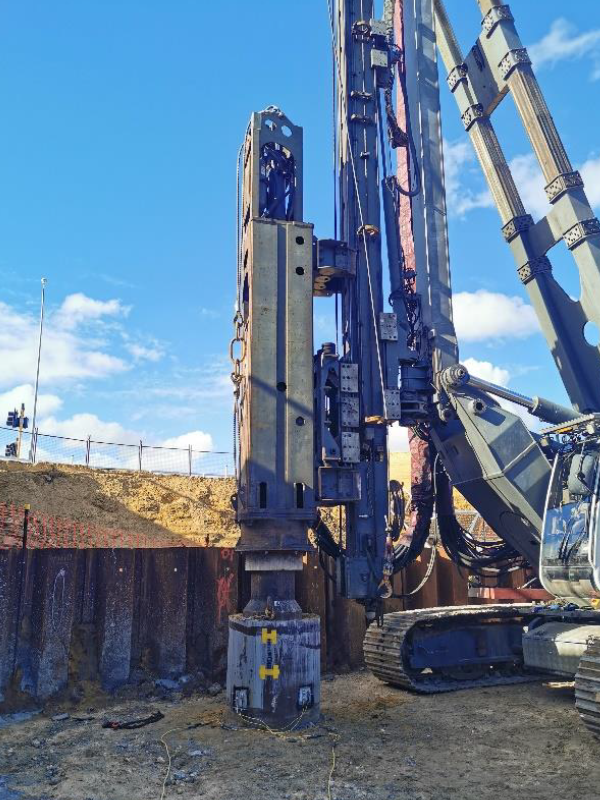
Strain and acceleration transducers are bolted to the pile section at a specified distance below the pile head. A drop hammer then strikes the pile, generating a stress wave that travels down the shaft and reflects upward from the pile toe. The data captured by the transducers is recorded using the PDA-8G system, manufactured by Pile Dynamics Inc., and subsequently analysed using CAPWAP® signal matching software based on one-dimensional wave equation theory.
Analysis Methods
Two analytical approaches are applied to the recorded data:
The CASE Method provides a rapid, direct field estimation of mobilised resistance for each hammer blow. It is particularly suited to preliminary assessments and driven pile applications where site-specific damping factors have been established.
CAPWAP® Signal Matching provides a more rigorous post-test analysis, extracting static and dynamic soil parameters for both the pile shaft and toe. By iteratively matching calculated and measured pile-top response, CAPWAP® produces detailed output including shaft resistance distribution, end bearing, driving stresses, and a computed load-settlement relationship.
What It Determines
DLT analysis provides engineers with compression capacity, shaft resistance distribution, end bearing contribution, driving stress evaluation, and an estimated load-settlement response — all from a single test event. Restrike testing can additionally be employed to assess time-dependent capacity changes such as soil set-up or relaxation.
Considerations
As with all geotechnical test methods, DLT results represent the mobilised capacity at the time of testing and are subject to the inherent limitations of one-dimensional wave theory when applied to complex three-dimensional pile-soil systems. Results should be interpreted by a qualified engineer in conjunction with appropriate geotechnical site data, construction records, and applicable factors of safety.